
St. Croix County Property Value Types
A property value search in St. Croix County can return figures that look alike but do different jobs. Assessed value is recorded for tax administration. Market value estimates what a property might sell for under stated conditions. A sale price is tied to an actual conveyance, when the recorded deed states the amount. A sample tax bill shows the assessed fields plainly. It is not a market opinion.
| Value | What It Is | Where |
|---|---|---|
| Assessed value | Value recorded for tax administration, often split between land and improvements | Parcel or tax record for the stated year |
| Market value | Estimate of a likely exchange under market conditions, not a bill amount | Independent appraisal or clearly labeled estimate |
| Recorded sale price | Consideration tied to a specific conveyance, if shown | Deed or transfer record; exact vendor field not captured |
| Land and improvements | Separate assessed portions that add to the printed total | Sample bill or parcel record |
An assessment ratio is not a discount. It is not a guaranteed market factor either. The 2023 Star Prairie sample bill lists an average ratio of 0.6678 beside its land, improvement, and total assessed amounts. That number belongs to one parcel, one tax year. The bill sets out no countywide ratio rule or revaluation cycle. Use the ratio only as printed, and let the county tax and GIS routes supply parcel-specific assessment information.
Open St. Croix County property information Open the Catalis public tax and parcel search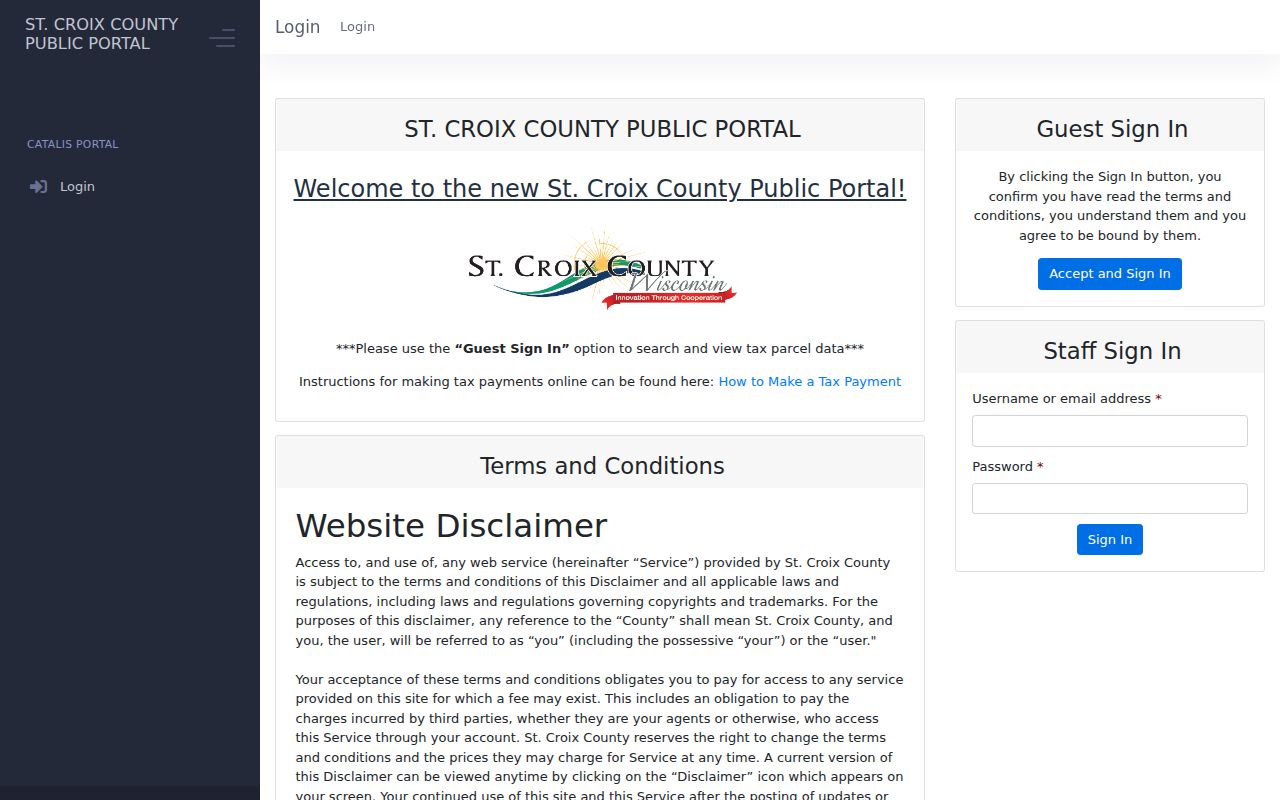
Check the parcel and tax year before comparing any value across records.
St. Croix County Sample Value Record
The 2023 Town of Star Prairie tax bill makes the value fields concrete. Land is assessed at $29,600. Improvements add $171,800. The total assessed value comes to $201,400, with an average assessment ratio of 0.6678. Those figures belong to that parcel and tax year alone, so never borrow them to estimate another property's current value.
The bill also lists credits and tax installments. Those change the amount due. They do not change what assessed value means. Its legal location block includes a parcel number, an alternate identifier, section-township-range, acreage, plat, and lot, though the notice warns the description may not be complete.
For value analysis, keep the tax year and parcel identity together, and take boundary questions to a recorded deed or survey.
Read St. Croix County Treasurer information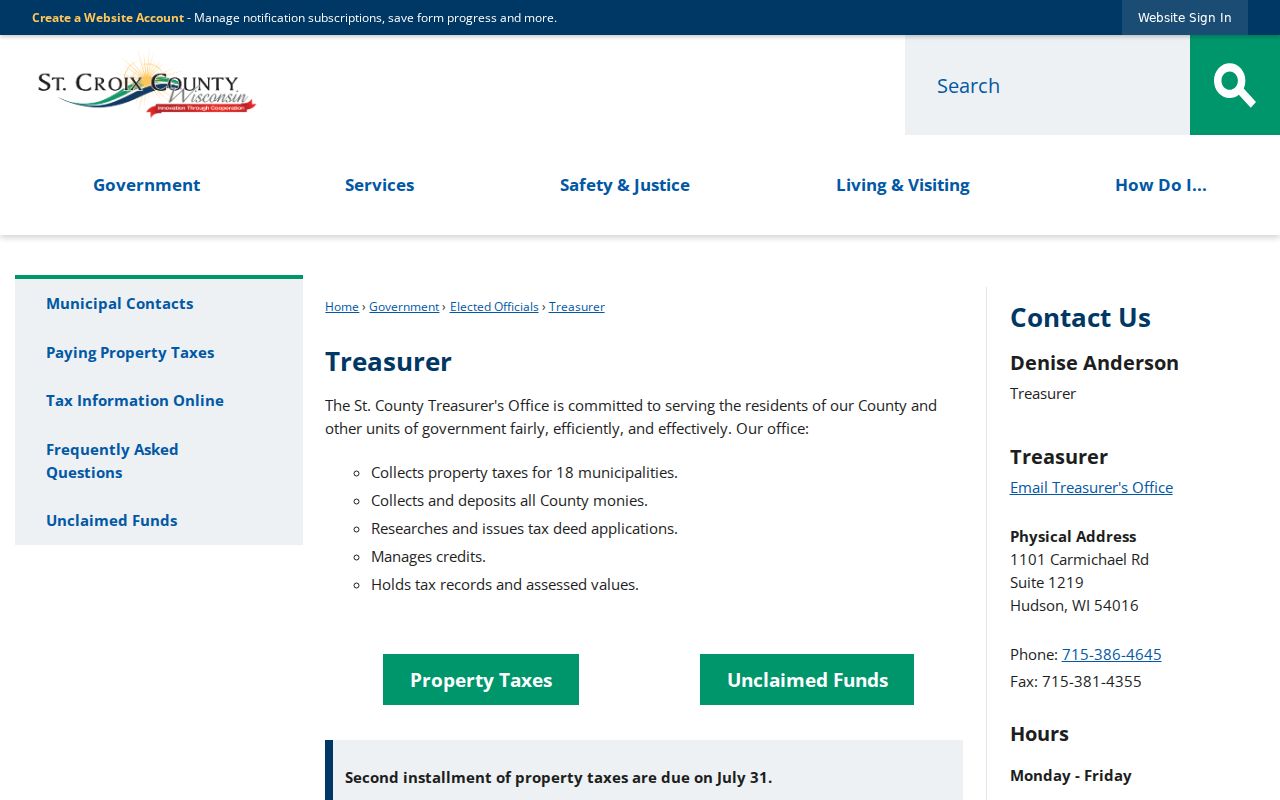
Bill questions go to the Treasurer; assessment fields come from the parcel record.
River Falls Value Context
Census QuickFacts puts the median owner-occupied housing value for River Falls at $327,600 across 2020–2024. That is a citywide statistic. It is not a St. Croix County assessment. It is not a sale price or a value for one parcel, and because River Falls spans St. Croix and Pierce counties, the figure also crosses two county record systems. The DOA municipal table lists River Falls at 16,182 in the 2020 Census and 17,445 in the 2024 estimate. Those are population counts. They supply context, not a valuation trend. To judge one property, read its assessed fields and tax year, then find any transfer in the deed index. A city median cannot replace a parcel comparison.
St. Croix County Assessment Timing
The county publishes no stated revaluation cycle, parcel refresh schedule, or recent countywide equalization ratio. A value can look stale. Check the year on the parcel or bill. Then contact the local assessor or Real Property Listing with the parcel number. Ask which assessment record and review process apply there. Do not borrow a schedule from another county.
Wisconsin keeps separate records for the tax roll, the bill, and the recorded deed. A transfer price and an assessed value differ because they answer different questions and may carry different dates. Keep those dates beside the figures. For bill credits or appeal steps, use the St. Croix County property tax records page.
Looking Up a St. Croix County Property Value
Finding the value of record starts with the parcel in Catalis or the county property-information index. Search by parcel number, owner, or address. Use one key per search. Read the tax year first. Then separate land value, improvement value, and total assessed value if those fields appear. For a current assessed record, contact Real Property Listing or GIS rather than inferring from an older bill.
- Find the parcel using its number, owner name, or house number and street name.
- Record the assessment year and separate land, improvements, and total values.
- Check a recorded deed for a specific transfer price if one is available.
- Use an independent appraisal for a market opinion; do not treat a tax value as one.
- Assessed value
- The value recorded for tax administration for a stated year.
- Market value
- An estimate of likely sale value, not the parcel's tax amount.
- Assessment ratio
- A comparison figure on the sample bill; its local application is not fully documented.
- Sale price / consideration
- Amount connected to an actual transfer if disclosed in the instrument or related record.
- Reassessment
- A process that updates a valuation; a St. Croix County cycle was not captured.
What a St. Croix County Assessor Value Is Not
An assessed figure is a tax record. It is not today's market appraisal. The tax roll can carry a different date, method, and purpose than a buyer's offer or a lender's appraisal. A recorded sale price belongs to one transfer. It may not stand for a later market, and one bill's assessment ratio is no universal multiplier.
Value vs price. A St. Croix County assessed value is used in tax records. It is not what the parcel would sell for today and is not an appraisal.
Compare St. Croix County Property Values
A 2023 tax bill from the Town of Star Prairie shows how one account splits its numbers. Land carries $29,600. Improvements add $171,800. Together they give a total assessed value of $201,400. The same bill prints an average assessment ratio of 0.6678, plus credits and installment amounts. Treat that ratio as a figure on this one bill, though. It is not a formula for converting any St. Croix County assessment into today's market price.
| Record Detail | What to Compare | Why It Matters |
|---|---|---|
| Tax year | Use the same year on each bill or assessment detail | Values and charges refer to a stated period |
| Land and improvements | Keep the two components separate before reviewing the total | A changed component may explain a difference between years |
| Assessment ratio | Record the displayed ratio and source bill | One sample ratio does not set another parcel's value |
| Tax amount | Compare levy, credits, and installment status separately | The bill due is not the property's assessed value |
Start with the county's property-information route and the Treasurer page. Use them when you need account and payment context. A bill that seems out of step with a transfer deserves a closer look. Pull the recorded deed and its consideration where one is stated. But not every instrument names a price. And a price from an earlier year may not compare cleanly with a later one. A nearby lot may differ in acreage, access, improvements, or legal description. It is not a true match for your parcel. For any assessment question, gather the whole file first. Keep the parcel ID, tax year, land value, improvement value, and total in one place. Add any sales records or survey information that supports your case. St. Croix County publishes no current appeal deadline, review-board calendar, or revaluation cycle on those pages. The assessment notice tells you which assessor or review body handles the dispute. Confirm the current process with that office before you submit anything. For paying a bill, the county's tax page is the right stop. The deed access page leads to the recorded-transfer systems. Citywide statistics call for the same caution. Census QuickFacts puts the River Falls median owner-occupied home value at $327,600 for 2020–2024. That figure spans more than one county's geography. It cannot substitute for an individual St. Croix County assessment. Treat it as broad context only. Then go back to the parcel record and its stated assessment year.