
Search St. Croix County Property Records
Match the record to the question first. An address works well for a first look. The county property-information index then routes you to the public tax portal, maps, deed records, and land-use resources from a single page. Use the parcel before a name search. For a transfer, follow the parcel owner into the Register of Deeds index and read the newest recorded instrument. Boundary questions need maps. Pull the parcel in GIS, note its map context, then chase the plat, certified survey map, or survey when a line matters.
Carry the parcel number, street address, legal description, tax year, and deed reference with you between systems. That habit saves time. Each office indexes a different record set. The property-information page is the broad starting point, while the Treasurer and Register of Deeds hold the records behind those summaries.
- Search Catalis by house number and street, owner name, or parcel number. Enter only one criterion at a time.
- Copy the parcel number and compare the situs address with the mailing address.
- Use Tapestry EON or Laredo to look for the newest deed and related filings.
- Open Beacon or COMPAS to see the parcel, aerial context, and available land-use layers.
- Ask the responsible office for an official copy or a record that is not online.
A search result is a lead, not a survey or a title answer.
St. Croix County Property Records Offices
St. Croix County splits land records by function. The Register of Deeds records the instruments that convey or encumber land. GIS links each parcel to maps and assessment data through Real Property Listing. Tax bills and payments belong to the Treasurer. Community Development keeps zoning and land-division files, while the Sheriff, Clerk of Courts, and Register in Probate hold court and estate records that can affect a parcel.
St. Croix County Register of Deeds
Suite 1215, 1101 Carmichael Road
Hudson, WI 54016
715-386-4652
Real Property Listing and GIS
Parcel, assessment, and map records
St. Croix County, Wisconsin
715-386-4680
St. Croix County Treasurer
Suite 1219, 1101 Carmichael Road
Hudson, WI 54016
715-386-4645
St. Croix County Records Index
St. Croix County routes its property records through a single property-information index, organized by route rather than by record name. That honesty helps. The page links to land records, maps and GIS, tax information, the surveyor, foreclosure notices, tax-deed property, and land use or zoning. A deed is not a tax bill. A tax card is not a legal description. That distinction saves dead ends.
Deeds, mortgages, satisfactions, plats, certified survey maps, and federal tax liens all sit with the Register of Deeds. Two vendor indexes serve them. Tapestry EON suits occasional users; Laredo suits heavy ones. Laredo requires an access agreement, an escrow account, and a contract of at least three months. Vendor text can stray from the official document. Get the office copy before relying on exact wording for a legal or title decision.
The county publishes no oldest year, field labels, or universal image fee for the index. Ask the office directly rather than assuming another county's vendor setup applies. The index simply groups the public routes.
Open St. Croix County's property-information page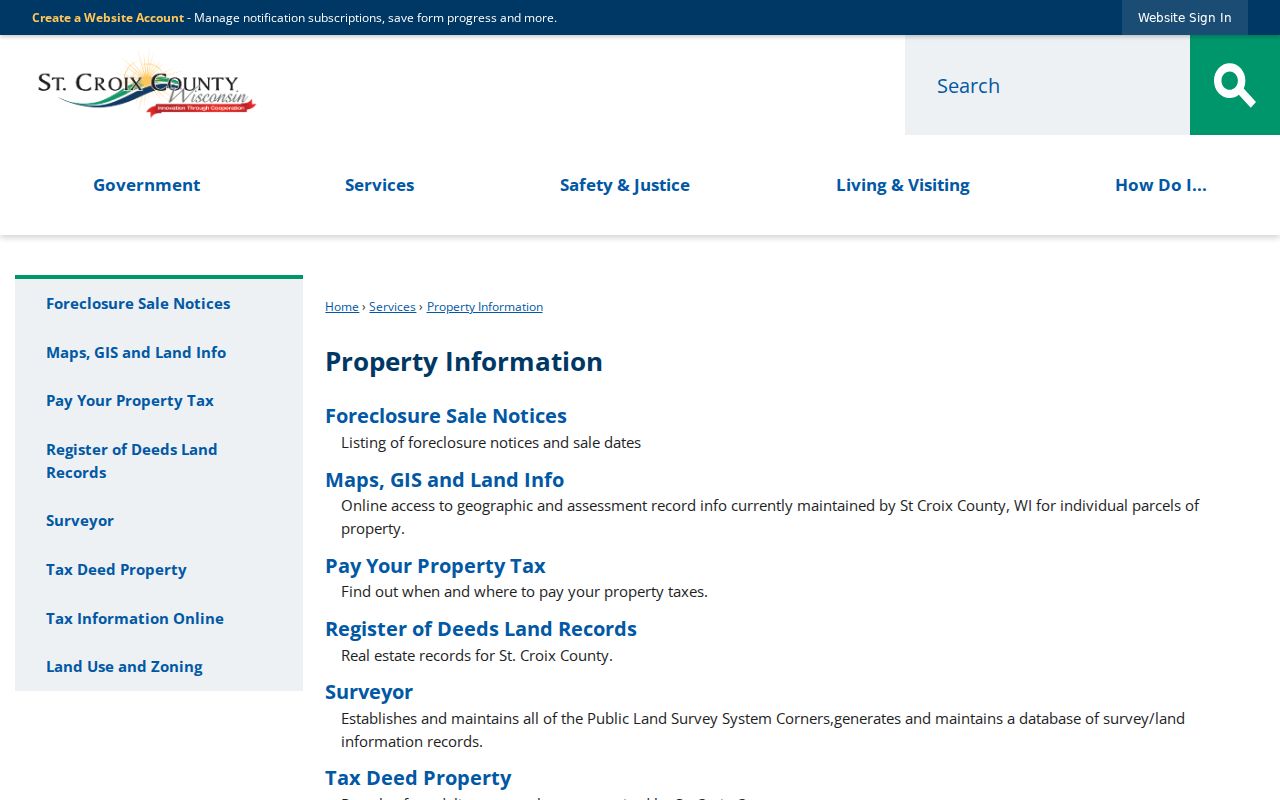
Choose the custodian first, then carry the same parcel number into that office's portal.
St. Croix County Tax Search Fields
The Catalis public portal documents three ways to search. Run one at a time. Choices are a parcel or property number, an owner's last and first name, or a house number with street name. The instructions advise entering less rather than more. A known parcel is the tightest key, while an address often opens a purchase or family-history search fastest.
| Search key | How to enter it | What to check next |
|---|---|---|
| Parcel / property number | Try the number with and without punctuation. | Compare the situs and legal description. |
| Owner name | Use last and first name, one criterion at a time. | Check each parcel address before treating a match as the right property. |
| Address | Enter house number and street name. | Keep the mailing address separate from the land's situs. |
Searching and paying are separate steps on the portal. Guests can search and view without checking out. The payment instructions list a $1.50 e-check fee and a 2.99% card fee. One transaction covers at most ten parcels. Those are vendor charges for a payment workflow. They are not the price of reading a search result.
Taxes can also be mailed, placed in the county drop box, or paid in person. The guest sign-in screen keeps public access apart from staff login.
Open the Catalis St. Croix County guest portal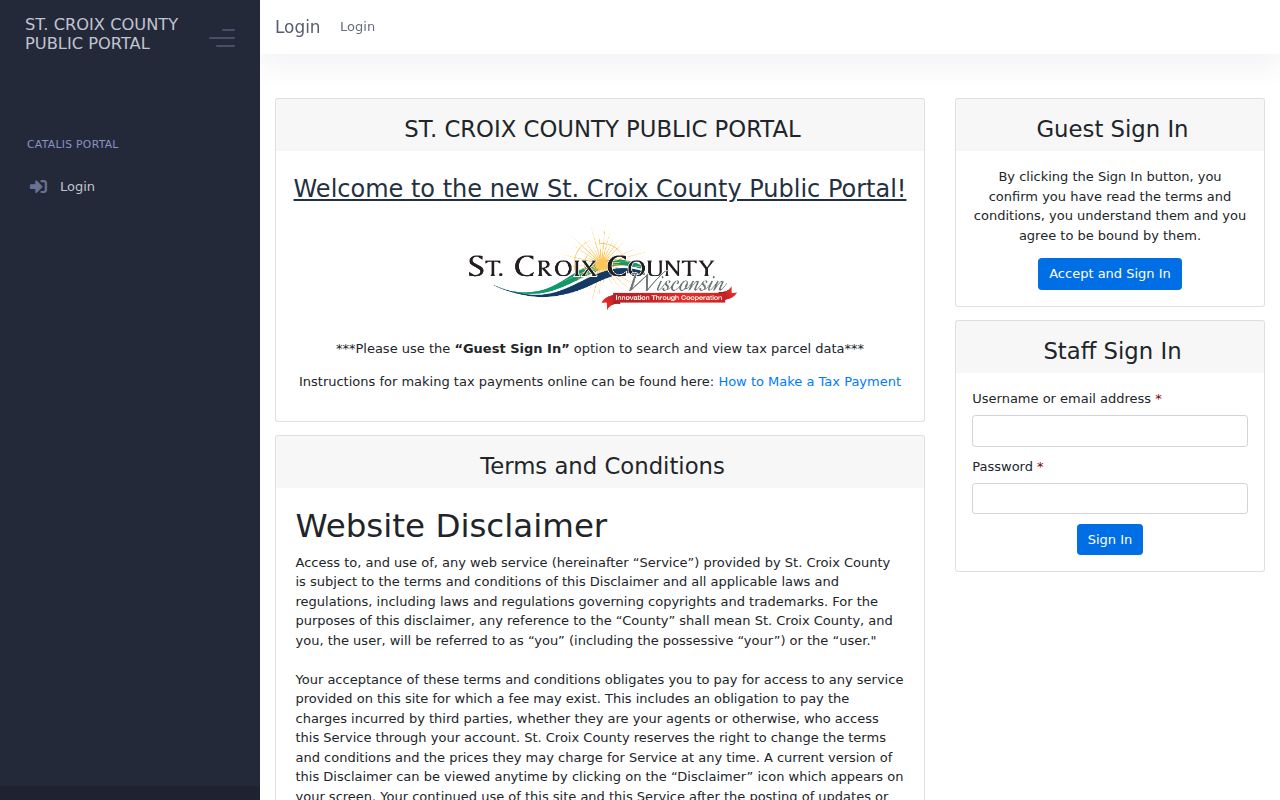
Guest Sign In handles the public tax and parcel searches.
St. Croix County Parcel Map Layers
Beacon and C.O.M.P.A.S. both serve St. Croix County maps. Their interfaces differ. Beacon carries land-record data, tax and assessment data, aerial photography, and one-foot contours. COMPAS can display zoning permit data when the “Laserfiche – Documents” option is enabled in the table of contents. Layer names and identify controls can shift. Treat the county's published list as a guide to available themes, not a promise of exact labels.
Maps do real work. They help locate a parcel, read terrain, and flag a shoreland, floodplain, or Lower St. Croix Riverway overlay. They cannot settle a boundary. The county itself warns that geographic information is for reference and should be checked before critical use. When a line, easement, or lot split drives the decision, trust the recorded plat, certified survey map, or survey instead. County survey staff maintain the public-land-survey corners and land-information records. The GIS page links viewers and statewide data.
See St. Croix County GIS and land-information routes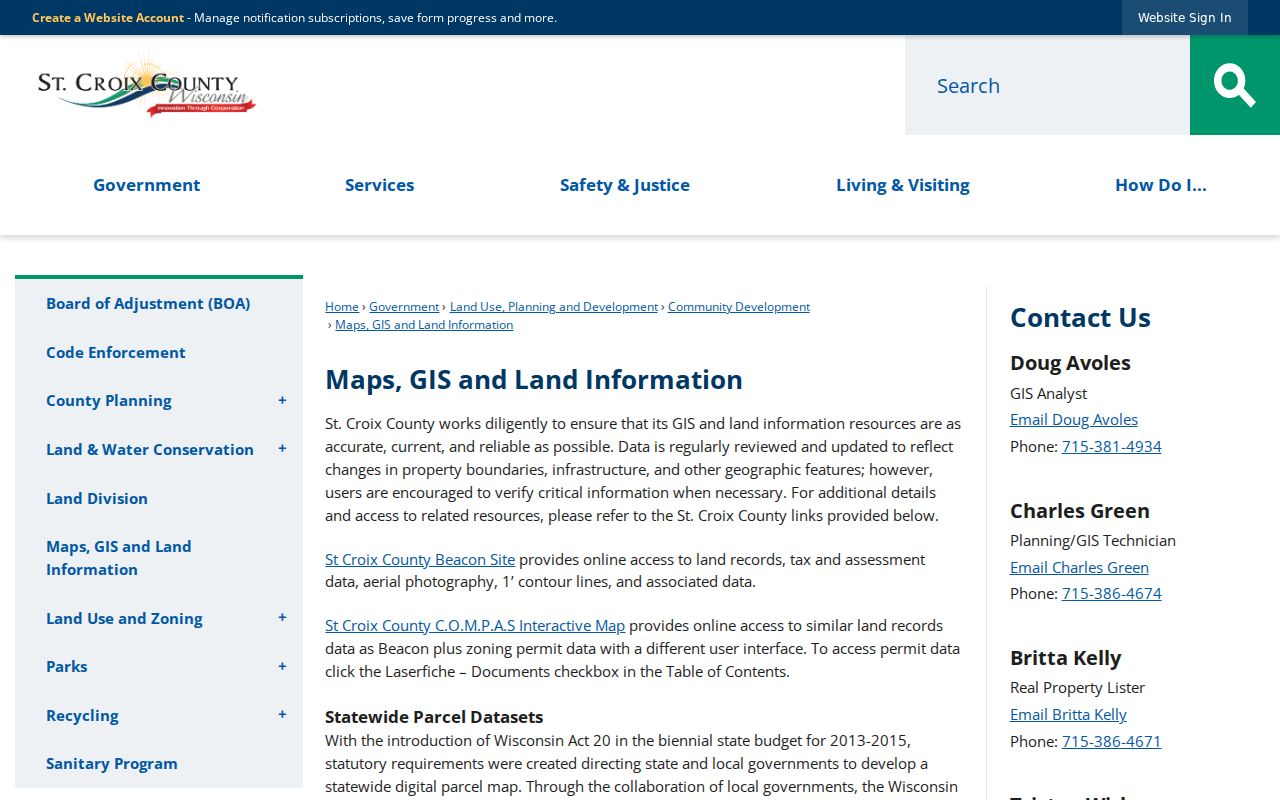
Find the parcel on the map first, then confirm legal details in a deed, plat, or survey record.
Types of St. Croix County Property Records
Four record types carry most of a parcel's story in St. Croix County. A deed records a conveyance or other land instrument. The assessment roll ties a parcel to ownership and value fields. A tax account tracks billing and payment status. GIS layers and recorded surveys fix the parcel's mapped boundaries. Court or probate files can explain why a transfer happened. Even so, the deed itself stays inside the land-record system. The county property records chain runs through it.
| Record Type | What It Documents | Kept By | Access |
|---|---|---|---|
| Deeds and liens | Transfers, mortgages, satisfactions, plats, CSMs, federal tax liens | Register of Deeds | Tapestry EON, Laredo, counter, or written request |
| Assessment and owner fields | Parcel identity, situs and mailing addresses, assessed value | Real Property Listing / GIS | County map and property-information routes |
| Tax account | Bill, credits, amount due, payment status | County or municipal treasurer | Catalis, mail, drop box, or counter |
| Maps and surveys | Parcel geometry, aerials, contours, plats, survey references | GIS, surveyor, Community Development | Beacon, COMPAS, plat/CSM, survey request |
| Permits and zoning | Land-use rules, conditional uses, variances, sanitary history | Community Development or city office | COMPAS documents, Ascent, or custodian request |
Pick the tool that matches the question. Use the deed index to verify a transfer. Go to the Treasurer for a tax bill. Turn to GIS to study location. A property search result in St. Croix County is a doorway into these records, not a replacement for them. For grantor-grantee work and copies, see the St. Croix County deed-record resources; for due dates and payment detail, use the county property tax records route.
St. Croix County Electronic Recording
County budget figures show a heavy tilt toward electronic intake. In 2024, the Register of Deeds recorded 11,261 e-recorded documents against 1,608 on paper. The office rejected 4,328 submissions. The year before, the counts were 10,413 electronic, 1,595 paper, and 3,903 rejected. Those numbers describe how documents arrive at the office. They do not mark the start of the online index. The county has published no exact imaging cutover year or oldest online deed year.
That distinction matters when a chain of title seems to stop. Ask the Register of Deeds for grantor-grantee, tract, book, or microfilm references. Then use the legal description to tie older records to today's parcel number. Wisconsin Historical Society or State Archives collections may hold historical clues for St. Croix County property records. The FamilySearch catalog may help as well. The county office remains the source for any recorded instrument. Older deed research may need more than a vendor search.
The county explains its current electronic land-record access choices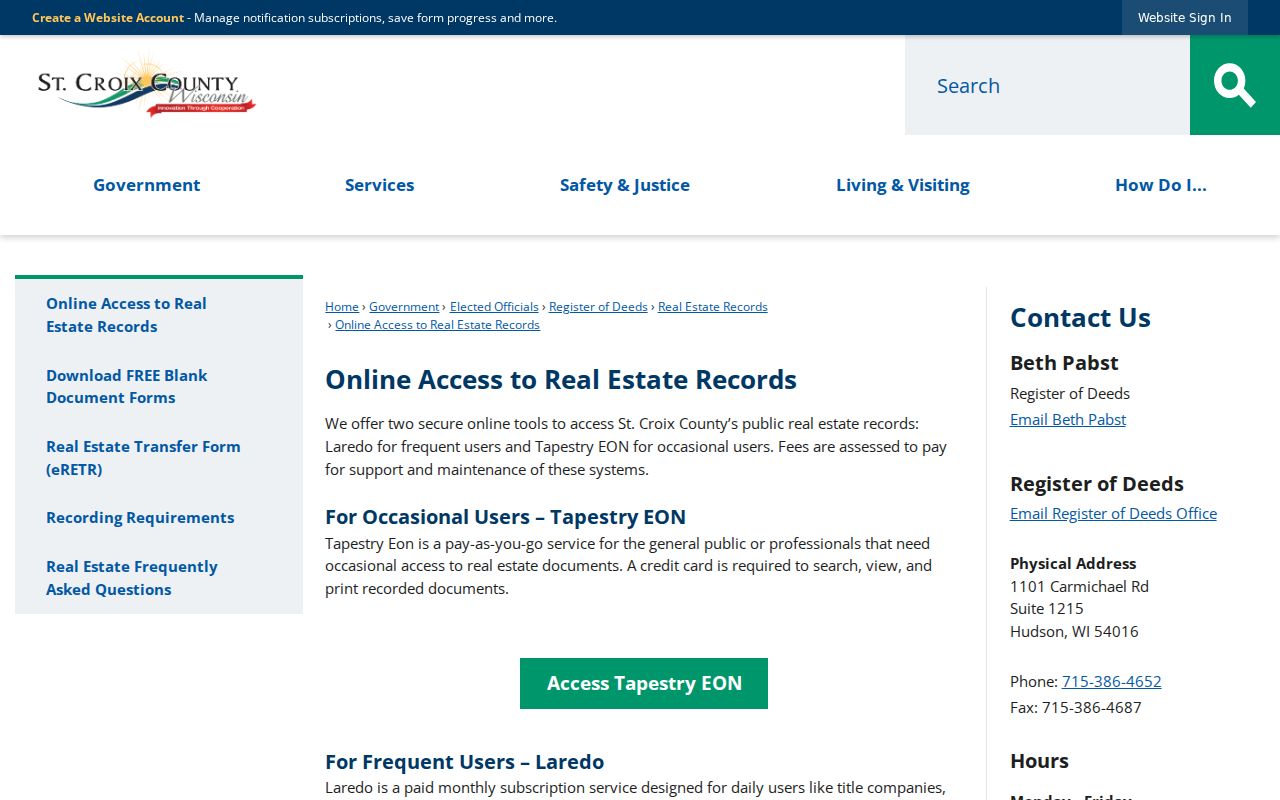
If the online chain has a gap, call the office before assuming an older deed never existed.
St. Croix County Tax Bill Details
A 2023 Town of Star Prairie tax bill shows why property records should be read as a set. It pairs a parcel number with an alternate parcel identifier. It adds a situs address, section-township-range, quarter-quarter, acreage, the Pine Acres 2000 plat, and Lot 1. Land value sits apart from improvement value and total assessed value. Those fields can reconcile a street address with a deed or plat when a parcel carries more than one identifier.
The sample bill lists land at $29,600, improvements at $171,800, and total assessed value at $201,400, with an average assessment ratio of 0.6678. Credits and payment amounts appear too. The figures describe that single 2023 bill, not any other parcel's value. Note: the bill itself warns that its property description may not be a full legal description. When legal precision matters, copy the description from the recorded deed or survey.
St. Croix County mails tax bills in mid-December. Installments fall due January 31 and July 31. A later ownership change does not trigger a new printed bill, so a tax bill may still name an earlier owner of record or show an old mailing address.
St. Croix County Foreclosure Records
The Sheriff posts foreclosure notices. Sales are held Tuesdays at 10 a.m. unless the day is a holiday. A third-party bidder must file the CV-550 Eligible Third-Party Bidder Affidavit with the Clerk of Courts before the sale. The bidder must also bring a file-stamped copy. The Sheriff also notes that it holds no keys to the property. Treat a notice as a lead for due diligence. Do not treat it as proof of title, access, condition, or possession.
Tax-deeded parcels follow a separate County Clerk process under Wisconsin Statute chapter 75. The county lists properties and takes sealed bids. Bids require a 10% deposit by cashier's check or money order. A winning bidder pays the balance within 30 days. The county then issues a quitclaim deed. Sales are as-is. The county supplies no title insurance. Corner stakes may be absent. The buyer carries survey, access, zoning, and utility risk. The Sheriff's page spells out the foreclosure notice and in-person sale instructions for St. Croix County foreclosure records.
Read St. Croix County sheriff foreclosure notices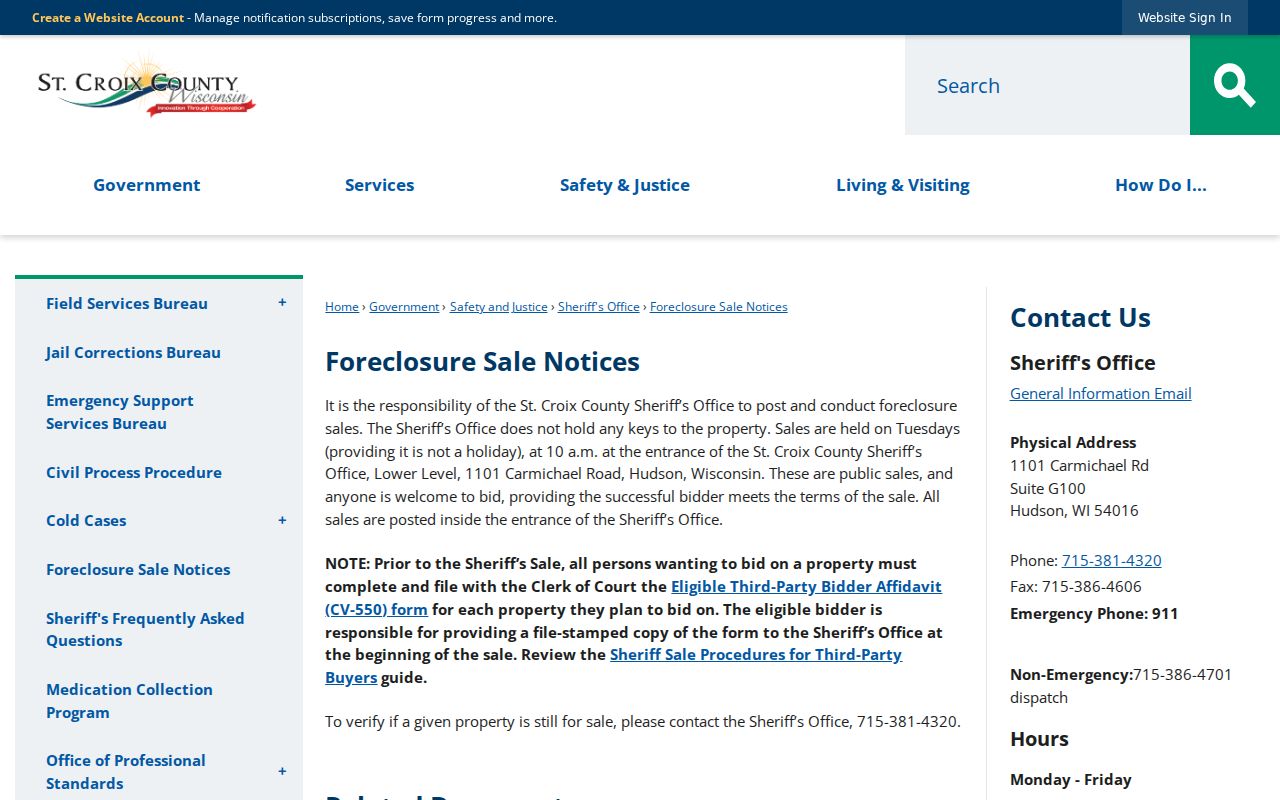
Before attending, confirm the notice, the bidder affidavit, the sale time, and the filed case information.
The published tax-deed terms cover the bid route and its limits.
Review St. Croix County tax-deed information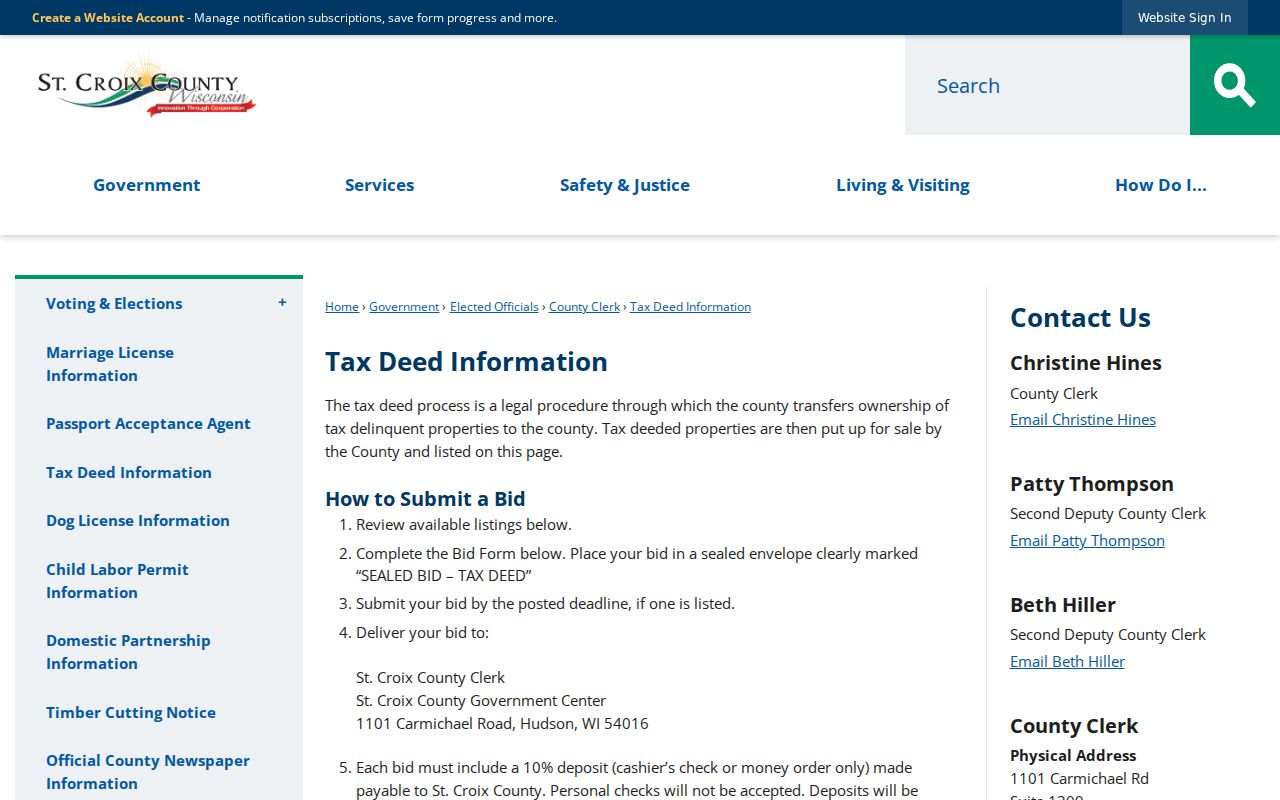
Read the parcel description, maps, lien records, court filings, and written sale terms first. Treat any listed amount as a figure, not a settled value.
St. Croix County Record Requests
Online systems do not always surface a record. Then send a focused request to the office that holds it. Wisconsin Public Records Law, Wis. Stat. §§19.31–19.39, favors access to government records. Still, a custodian need not create a new record. Nor must it create a new data format. Name the instrument or account, parcel number, address, date range, and preferred delivery. A request can be oral or written. A written denial must state its reason and review rights.
The Wisconsin DOJ sets no fixed number of days for a response. An authority must answer as soon as practicable and without delay. Fees are limited to actual, necessary, and direct costs of reproduction, locating, and delivery. Locating charges generally apply only once costs reach $50. Prepayment may be required above $5. Ask for a cost estimate before any broad search of St. Croix County property records begins. The office may redact protected material. No request compels an answer to a research question.
Read Wisconsin Public Records Law guidance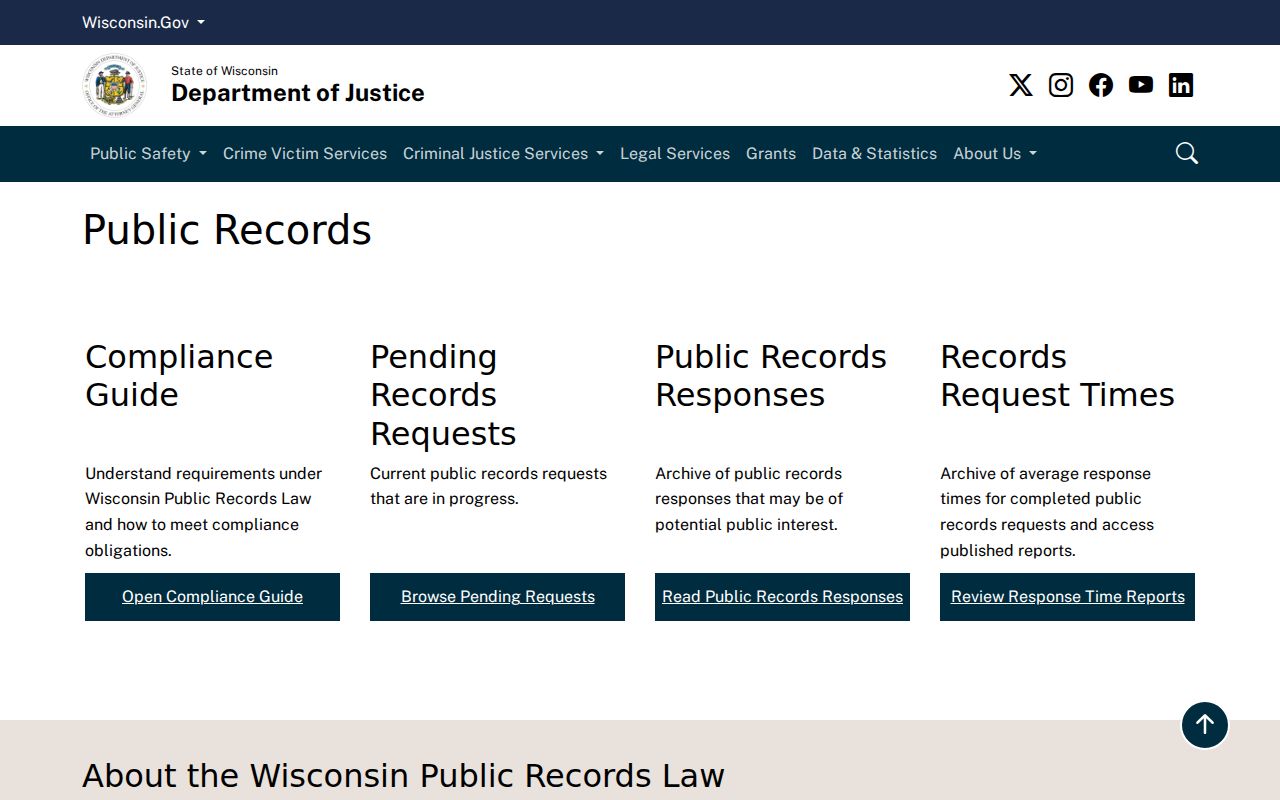
A tight, parcel-specific request helps a St. Croix County custodian find the record fast and quote a clear price.
Limits of St. Croix County Property Records
St. Croix County property records show only what an office recorded or maintains. The owner of record can lag behind a recent deed. A printed tax bill may predate a transfer. A GIS boundary is not a survey, and a tax description may be abbreviated. Court, probate, and vital files also hold restricted or sealed material. Rely on the public version, and ask the custodian to explain any redaction or access limit.
For a new-filing alert, St. Croix County offers a free Property Alert Notification System. It can notify a subscriber when a registered name appears in indexed land records. It is a notice tool only. It is not fraud prevention, title insurance, or a substitute for reviewing the deed itself. The county lists 1-800-728-3858 for enrollment help.
The county-specific filing alert route is available online.
Sign up for St. Croix County property filing alerts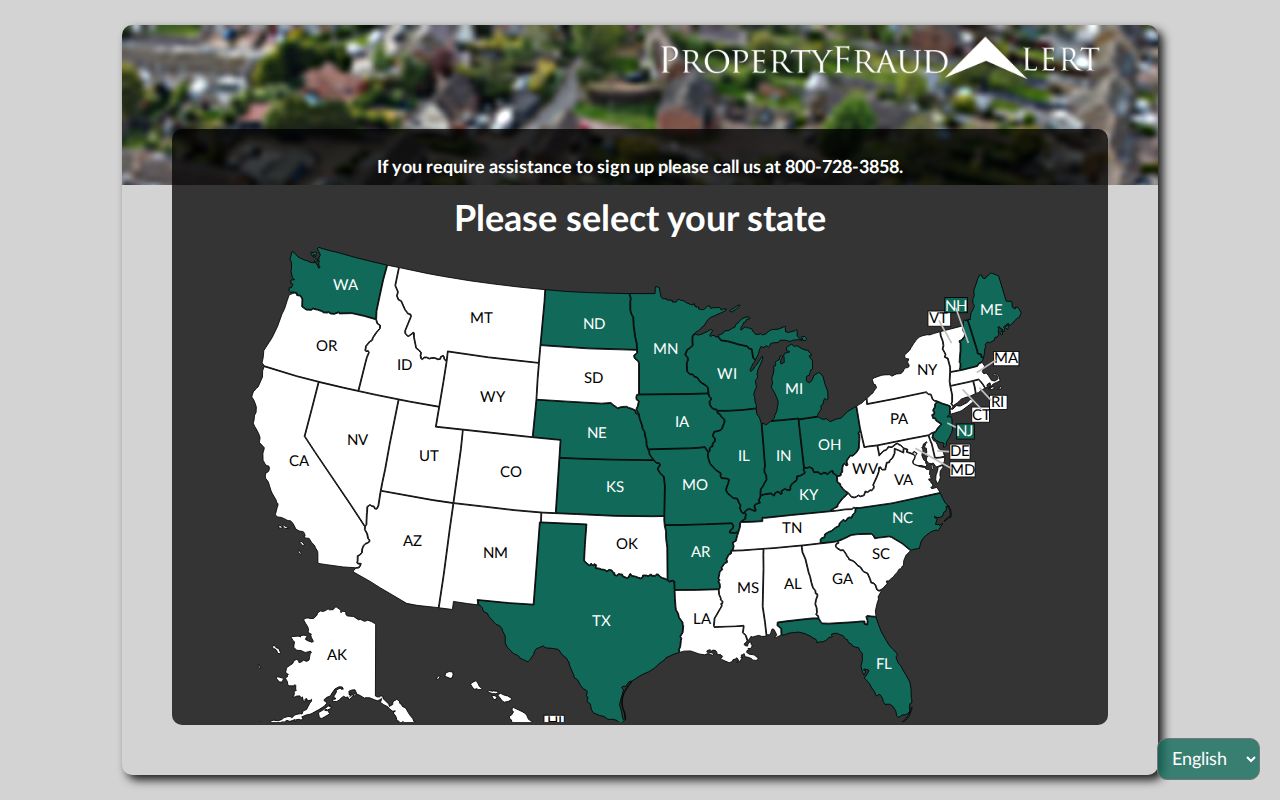
Treat the alert as one piece of a sound record review. Confirm any suspicious filing with the St. Croix County Register of Deeds before acting on it.
Lawful use. St. Croix County property records support title research, purchase due diligence, tax review, and civic oversight. Do not use an owner's information to stalk, threaten, or harass anyone.